Where I started
My earliest work in pathology, CRO studies, and preclinical systems made one thing clear: seeing disease is not the same as understanding it. That gap became the engine for everything that followed.
About
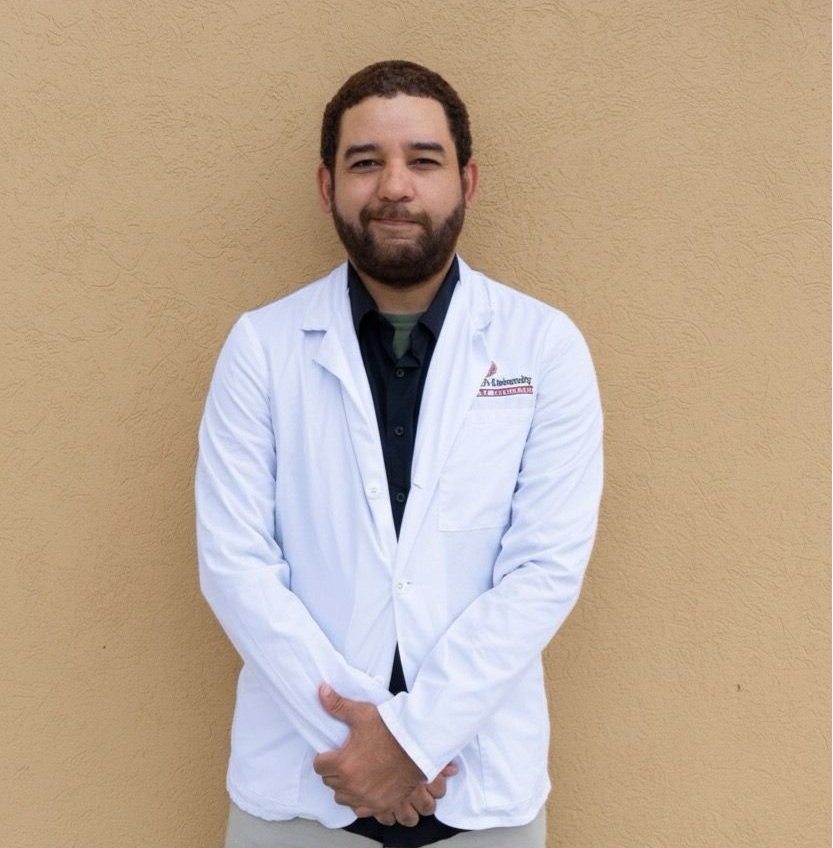
MD Candidate | Physician-Scientist
I am a PhD immunologist and Harvard- and MGH-trained postdoctoral fellow, now an MD candidate targeting academic internal medicine and oncology — building the science that changes how cancer is understood, then training to practice medicine shaped by that science.
My path spans clinical pathology, preclinical CRO work, doctoral immunology at UH Mānoa, postdoctoral cancer biology at Harvard Medical School and MGH, and clinical education at SGU. The sequence was deliberate: build mechanistic depth in immunology and cancer biology, then anchor it in clinical medicine — so the next phase of research is more honest, more relevant, and more likely to change what happens in the oncology clinic.
Research
10+ yrs
Publications
4 articles
Citations
113
Research Narrative
Where I started
My earliest work in pathology, CRO studies, and preclinical systems made one thing clear: seeing disease is not the same as understanding it. That gap became the engine for everything that followed.
What I studied
During doctoral training, I focused on microRNA regulation of T-cell proliferation and signaling, asking how immune cells make decisions that later shape inflammation, tolerance, and disease response.
What questions drive me
I am most interested in research that can connect mechanism to consequence: what changes in a cell, why it matters for disease, and how that insight could ultimately improve patient care.
Where I am going
Medical school is not a departure from research. It is the clinical training needed to make the next phase of translational work more relevant, better framed, and more impactful. The destination is academic internal medicine — with oncology and immune-mediated cancer as the primary clinical and research focus — within a physician-scientist training program that values both.
Training Arc
2023 - Present
St. George's University School of Medicine
UK, Grenada, and U.S. clinical rotations
Clinical training that keeps future research grounded in real patient questions, real workflows, and real outcome gaps.
2022 - 2023
Harvard Medical School / Massachusetts General Hospital
Boston, MA
Extended translational training into cancer biology, tumor immunology, organoid systems, and the immune microenvironment — work that directly informs a long-term research agenda in oncology.
2019 - 2023
John A. Burns School of Medicine, University of Hawaiʻi
Honolulu, HI
Built a mechanistic immunology program around microRNA control of T-cell proliferation and signaling.
2019
Washington State University Gene Editing Core
Pullman, WA
Supported gene-editing workflows that turned experimental questions into tractable biological models.
Approach to Medicine and Research
I view medicine as a system that extends beyond individual patient encounters — one that needs physicians who also generate and evaluate the evidence. The patients I most want to help are the ones whose diseases we still understand poorly, and whose best treatments have not yet been discovered.
My goal is to be that physician: one who treats disease today and produces the science that changes how it is treated tomorrow.
This site uses cookies.
Essential cookies remember your cookie preference. Analytics cookies stay off until you accept all cookies. Visit the cookies policy page for more information about consent mode and to change your preference later.
Analytics cookies stay off until you choose otherwise.